Wednesday, August 15, 2012

A Great Post-Apocalyptic Film...with Kevin Costner?!


In late 1984, just about the time cowboy/actor/president Ronald Reagan was making his little funny about bombing Russia over a live microphone during a sound check, the American Playhouse movie Testament was debuting on PBS. It sounds somewhat like an oxymoron, but Testament is a small, subdued, quiet movie about nuclear apocalypse. There are no marauding biker gangs, gravel quarries, cannibals, mutant zombies, or underground retreats built by forward thinking, scientist survivalists. Heck, there's not even any burned out buildings or rubble. What there is is just a normal family in a small northern California bedroom community dealing with the end of the world.


The power of the film is in its simplicity and understatement. Unlike other cautionary tales of its ilk, like Threads or The Day After, Testament does not lean on visuals of physical destruction and keyloid scars to make its point, but instead uses quiet, ever-building, emotionally intense scenes that are much more soul-crushing. Nevil Shute's On the Beach attempted to work this same angle with limited success, but there were just too many characters and subplots, and as a result, some of its emotional power was diffused. Conversely, Testament is focused in concentric circles with the character of the mother, Carol Weatherly, squarely in the bullseye surrounded by her family and then the community at the outer edge. This structure enables the film to put all of its emotional eggs in the basket of the lead character who both observes and relays the emotional ripples that ebb and flow throughout the story.


The tremendous, but low key, power of this maternal role comes from both superior script writing and top-notch acting. Based on a short story by Carol Amen, the script was fleshed out by John Sacret Young who would go on to write for the critically acclaimed West Wing TV show, and co-create and write the sublime Vietnam series China Beach. Young begins the story by introducing the key community residents via an early morning bike ride taken by father and son, Tom and Brad Wetherly. This clever and efficient set-up will pay off continuously in the latter half of the film by showing the slow dissolution of the town and the fate of characters initially met by the audience on this first bike ride.


Young's script then returns to the Wetherly home where the rest of the family is introduced going about their morning routines including mother, Carol, daughter Mary-Elizabeth and youngest son Scottie. We then spend two days and one night with the family watching them interact, particularly the parents, with one another. Jane Alexander plays the mother, Carol, as a very organized, multi-tasker who keeps the family running smoothly and appears to be quite content when she's not having minor late night anxiety attacks about what to get her eldest son for his far-off birthday. Alexander is pitch perfect for this role and never resorts to melodramatic theatrics, nor does she play it like an invulnerable superwoman. It's a tightrope walk very few actors could accomplish, and Alexander's acting draws the viewer in without ever being showy or self conscious. Her scenes as a serious but loving mother are very easy to identify with as is her give-and-take relationship with her husband Tom, played by William Devane.


Devane is the most interesting casting choice of the ensemble as he had traditionally played the slick, villainous-type character back in the 70's in such roles as Marathon Man and Family Plot. In Testament, he plays against type as a nice, loving father, but there's still that undercurrent of drive that suggests he's a go-getter in his business and personal dealings. Alexander and Devaine's characters seem somewhat of a mismatch, and in a poignant scene later in the film, Alexander's character explains to her daughter that Tom was not the type of man she was looking for at all when she fell for him. It's attention to little details like this mismatch that brings a sense of realism to the film and keeps it from turning into smarmy, predictable melodrama.


The rest of the cast of the family is rounded out by Roxana Zal, Rossie Harris and Lukas Haas as the Wetherly kids. Zal was a superior child actress who won an Emmy for the landmark TV-movie, Something About Amelia and appeared in movies like Table for Five and River's Edge. Harris is immediately recognizable as the kid Peter Graves developed an unhealthy, but hilarious, liking for in Airplane! and finally there's human-gnome, Lukas Haas in his very first role, two years before he would play the Amish boy in Witness. Although the kids aren't the central focus of the story, all get an opportunity to act with the amazing Alexander, in both pre and post nuke segments, with each scene having its own distinct tone and pathos. Whether its the near horrifying visual of Alexander bathing the tiny, sick, vulnerable Haas in a bathroom sink, the honest talk about love and sex with Zal or the poignant dance with son Harris to the Beatles' tune All My Lovin', the kids hold their own, taking their cue from Alexander and matching her in low-key, emotional subtlety. The understated power of these scenes and many others is so incredible, I get misty just thinking about them.


Obviously, the director, Lynne Littman, knew what she had in both script and acting talent and did an excellent job of staying out of the way. There are no stylized shots, odd angles or excessive camera movement (although there is some great handheld work in a scene where Alexander is frantically searching for something) as it probably could not have added anything of value and been more of a distraction. This 'less is more' approach really showcases the performances where the attention needed to be focused.


"Your children are not dead. They are just waiting until the world deserves them."
-Robert Browning, The Pied Piper of Hamelin


14 years before Atom Egoyan would cleverly use The Pied Piper of Hamelin as a metaphor for the goings-on in a small Canadian town in the film The Sweet Hereafter, John Sacret Young would employ it by setting Testament in the mythical northern California town of Hamelin which lay well north of San Francisco around the Ukiah area. Early on in the film, the local teachers and kids are in the process of adapting the Robert Browning story that bears their town's name into a play. While Testament is filled with effective, gut-wrenching scenes, when the children finally get to stage their play, it's emotionally devastating.


What's most incredible to me is how Testament's screenwriter could pack so much into a brief 90-minute movie. There are characters and subplots that I haven't even touched on (gas station owner Mike and his son Hiroshi are prime examples) which add tremendously to the film's emotional punch. And as the blog title suggests, even Kevin Costner, who appears in a small role along with Rebecca De Mornay, couldn't do damage to this post-apocalyptic movie. Surprisingly, he even displays some acting chops for a change!


Overall, Testament is pretty damn far from overproduced claptrap like The Postman, or the manipulative nonsense of The Road. What it is is a stripped-down, organically real, emotionally heartrending film that brings authentic pathos to the characters and the story without ridiculous contrivances. Unlike our former president, it takes the notion of armageddon quite seriously, but is never overly earnest or maudlin. The piece is anchored by a world-class performance from Jane Alexander who was Oscar-nominated for the film and brilliantly written by John Sacret Young. 
If Testament isn't the greatest post-apocalyptic art-house film of all time, it's easily the best one Costner's been in and deserves to be seen by any who venture into the serious side of the genre - or joke about dropping nuclear bombs. It's currently available on YouTube:


Final score: 10/10


Monday, July 30, 2012

And Then There Were Five


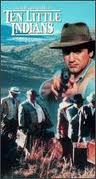
Just in case you don't read cyrillic, the movie on the right is called Desyat negrityat which is, like the movie on the left, another adaptation of And Then There Were None. It is the most faithful, most painstakingly detailed, best written adaptation of the five theatrical releases of Agatha Christie's story. So faithful, in fact, that it retains the wildly offensive (in modern day terms) original UK published title of Christie's novel which I won't bother mentioning here since A) it's been out of use for decades everywhere else B) did I mention it was offensive? There's absolutely no question, dispute or doubt among anyone who has seen all the adaptations, the Russian production wins the gold hands down. In my head, I know this to be true, and as much as I respect and admire the Russian version, I love the 1965 English mod adaptation even more. The remaining three major screen adaptations from 1945, 1974 and 1989 lag far behind these two. Here are five little reasons why...


1. Era  - Each of the five cinematic adaptations of Christie's novel, with the exception of the late-30's, period-piece, 1987 Russian production, was very much a product of its time. The first version, from 1945 entitled And Then There Were None, featured the quick, rapid fire delivery of dialogue that pegs a film to the 40's style of filmmaking. 


Shot in studio, the '45 version had a very stage-y feel to it, which is not necessarily a bad thing, but the code restrictions of the era prevented the darkness at the heart of Christie's novel from being played out on screen even implicitly. Thus the story changed into a near-romp with characters breaking the fourth wall, quipping back and forth, and at one point, performing a comical daisy chain of spying on one another. The story would have made for great film-noir, but alas, the studio went the opposite direction, changing the lead roles into hero and heroine - a change that would be repeated in every subsequent screenplay to some degree, except for the Russian one. 


The '74 version favors directorial stylistic risks like those found in most films of the time. Peter Collinson's wide shots were so far away, however, that it was often hard to tell which cast members were speaking. In addition, his close-ups were shot at ground level at an awkward, up-tilted angle which also served to distance the audience from the characters. But this was the 70's and Collinson probably felt the need for invention given that the script was almost a carbon copy of the previous two films'. Adding to the problem were the clothing and hairstyles of the characters which were the worst of all the productions. Even the greatest 70's films were saddled with the semi-long hair and turtleneck aesthetic, but when a movie didn't work, it only added to the misery. 


And the 80's Cannon version, well, let's just say it was made in the 80's, and yes, that's Frank Stallone, and yes, he's wearing a bushman's hat.


The '65 version fortuitously was made at the dawn of the mod era and near the end of the big studio picture era. The influence of both is readily apparent, and though it may not be to everyone's taste, the confluence of eras gives the film some stylish 60's panache especially in terms or hair, wardrobe and make-up but also some classic cinematic heft in the straightforward manner in which it is shot, edited and scored. The choice to use black and white film may have been for budgetary reasons, but it actually works and doesn't feel inappropriate for the time. In fact, one of the few critiques I'd have of the '87 Russian version is that it was shot in color despite being set in the 1930's. It easily could have dispensed with color without losing anything visually.


2. Setting The setting in the novel was an island, and this is retained in the '45 and '87 versions. The original adaptation obviously employs a stage set with studio fakery while the Russian version makes use of a great location that, although not an actual island, certainly appears to be one and is integrally employed throughout the production. The '74 version is set in a huge middle eastern hotel which may explain the director's decision to shoot its cavernous interior from a distance. The '89 Cannon production is set in a part of Africa that is supposedly so remote that, in the story, a one-person, hand-pulled basket has to be employed to get over a gorge to the encampment. In one of the films most illogical scenes (and there are many of these), when the group finally makes it to the encampment, there is a huge, fully furnished tent, complete with carpets, phonographs and a grand piano. One of the group wonders aloud how the piano was brought to the site, but does not get an adequate response. The rest of the film is shot mostly in and around tents making the whole African setting rather moot. With its alpine chalet, the '65 version clearly has the superior setting for a number of reasons. First, it's remote enough for the inherent plot restrictions to make sense. It provides elements of danger with its high altitude and precarious cable car transit. And most of all, it is an incredibly beautiful, snow covered landscape.


3. The Cast  On paper, the '74 cast appears to be the best with great character actors from all over Europe like Oliver Reed, Richard Attenborough, Adolfo Celi, Maria Rohm, Alberto de Mendoza, Gert Frobe, Stephan Audran, Elke Sommer and Herbert Lom. However, the solid cast in this version is virtually neutralized by the horrible direction, photography and lighting. The acting itself is also very tepid (it's downright frozen in Elke Sommer's case) with the performances literally muted by  master shots from the cheap-seats. From this distance, it really appears as if most of the cast, save for Attenborough, is merely going through the motions or rehearsing. 
The '45 cast is much more lively, a little too much so, considering people are getting killed off in the story. The glaring miscast of this version, in my opinion, was Barry Fitzgerald who always seemed to be impersonating someone Irish rather than an actual citizen from that isle. His performance just doesn't seem to fit the character and certainly didn't bring to mind a barrister. I had a similar problem with Walter Huston who couldn't have seemed less like a doctor.
The '87 Russian cast is quite good with standout performances by leads Tatyana Drubich and Aleksandr Kaydanovskiy who play Vera Claythorn and Philip Lombard respectively. Far from the heroine in other versions, Drubich plays Claythorn as a petty, self-entitled, young woman who is nevertheless haunted by an event in her past. Kaydanovskiy's Lombard is similarly narcissistic and guilt-ridden. My only problem with this version was that the actor playing the Blore character (Aleksei Zharkov) looked so much like Lombard I was often confused about which was which.


Finally, the '65 cast, which may not have had the biggest names or the most skills, certainly had the most style and screen presence of any of the incarnations. Hugh O'Brian was the prototypical 50's & 60's handsome, beefcake, hero-guy and was quite serviceable and charismatic in the lead role.


But it's the European actors like Mario Adorf and Daliah Lavi that gave this version a dose of spice that is so lacking in the others. Adorf's physically imposing and somewhat threatening butler, Grohmann, is a far cry from the milquetoasts from other versions who seem perfectly content to be accused, insulted and even abused.


Lavi's character, a beautiful starlet, replaces Christie's spinster from the novel and definitely adds enough nail-biting flavor and sex appeal for anyone.


Add to this, old pros like Wilfred Hyde-White, Dennis Price and Leo Genn who play the more seasoned characters and it makes for quite an eclectic, colorful and distinctive cast. Also, Christopher Lee makes a cameo as the voice of Mr Owen and easily beats all the others who have taken this role including Orson Welles in the '74 version.


4. Sexiness Probably not a word anyone would associate with Christie's work in general and Ten Little Indians in particular, but when you cast former Bond-girl Shirley Eaton and future Helm-girl Daliah Lavi, you're going to have a screenful of sexy. And for the ladies, there's Hugh "Huge" O'Brian and pop star Fabian to enjoy. Ironically, I think this is one of the main reasons people are put off by the '65 production, because it does shamelessly inject some unnecessary cheesecake and steaminess into what is a fairly chaste story. While it's true the Lombard and Claythorne characters do hook-up in one fashion or another in every telling, the coupling is anything but sexy. In fact in the '87 Russian version, it's a near rape-like bedding of the Claythorne character. But I think the added sexiness in the '65 version gives a little zing to an otherwise dry story. Plus, does anyone really object to seeing Shirley Eaton in her underwear?


5. The Look The B & W photography actually enhances, rather than detracts from, the snowy mountaintop setting. Ernest Steward, the cinematographer for the '65 version who photographed a lot of the "Carry On" films, easily does the best job shooting the story out of all the adaptations. His black and white photography was so well composed that even the well worn print that was transferred to the film's only official DVD release still looks remarkable good. The appearance of the other versions is a consistent problem that runs through each without exception. It was as if the filmmakers thought the story alone was good enough to carry the movie to the winner's circle and didn't need to look good as well. Even the Russian version, which is well directed on excellent sets with great costumes, looks as if it was photographed on cheap stock giving it a fuzzy, washed out look.


The '45 version is passable, at best, while the '89 version, having been shot partially in a jungle setting and should have had a stronger look also failed to measure up. The '74 version appears absolutely abysmal with the aforementioned poor lighting and a horrid, brownish/beige color palette.


Honorable Mention - Score Malcolm Lockyer is not a well known film composer nor does he have a large or even recognizable body of work. But the score to the '65 version of Ten Little Indians is a great, brass-heavy, orchestral arrangement that features sleigh bells in the background. It's audacious, but it works like gangbusters to emphasize the spectacular, winter time, alpine setting. All other versions of the film tone the music down substantially with the occasional sting when something suspenseful happens, but Lockyer goes big and it works for the most part especially in the opening credits.
Bruno Nicolai apparently re-composed the '74 version's music and it's one of the few components of the film that's quality. But it is quite understated in a film that is already wildly understated.

Near fatal flaw As much as I gush about the '65 version, it originally had a horrible, ill-conceived, William Castle-like gimmick in the initial release that nearly sunk the movie. Just prior to the climax, the story comes crashing to a halt by the insertion of a "Whodunnit Break" wherein a clock is superimposed on the screen while moments of the film are played back with voiceover narration asking who the killer is. 


Far from adding any suspense, this dopey break actually takes the viewer out of the movie by making him conscious of watching it. I actually saw this film in the theater and distinctly remember the audience groaning as this interruption occurred. Happily, this moronic stunt was subsequently excised at future showings and on its TV release but is a bonus outtake on the DVD for the curious.


Finally, here are the five major screen releases ranked from best to worst with final scores by me:


Ten Little Indians                 (1965)  7.75/10    DVD (oop)
Desyat Negrityat                  (1987)  7.75/10    Youtube
And The There Were None  (1945)  6.25/10    Youtube
Ten Little Indians                 (1974)  5.75/10    Youtube
Ten Little Indians                 (1989)  3.25/10    Youtube


Monday, July 9, 2012

Les deux Messieurs


In 1946, after returning to France from the US, Julien Duvivier, director of such cinematic gems as Pépé le Moko and Un carnet de Bal made what is arguably his darkest and most daring film, Panique. Based on a story from prolific Belgian author Georges Simenon, Panique is a condemnation of mob mentality, xenophobia and anti-sematism wrapped in a noir-ish blanket in literally a carnival atmosphere. A scathing indictment of what had certainly transpired during the recently concluded war in France, it's no wonder both critics and French audiences rejected the film upon its initial release. Looking back though, it is much easier to appreciate what a bold, if somewhat nihilistic statement, about humanity Duvivier made in post-war France. 33 years later, in 1989, another French director, Patrice Laconte who was known only for his lightweight comedies at the time, would remake the film and actually improve on it.


Synopsis: A young local woman is found murdered. Both police and neighbors suspect the eccentric and misanthropic Monsieur Hire.

The knock on much of French cinema, especially art house, is the escargot-like pacing. That complaint is immediately neutralized by Laconte's Monsieur Hire which dives head first, and somewhat conventionally, into the mystery by showing the victim and investigating detective straight away. Next, the film focuses on Monsieur Hire himself followed closely by the object of his desire (and possible next victim?) Alice. It's obvious from the start, Laconte's remake differs from Duvivier's original in character, structure and ultimately theme. Instead of deconstructing the story in Panique or even updating it for our modern sensibilities, Laconte has reconstructed it into a quite fascinating mystery/character study that concentrates much more on the Hire character than the first film did. This comes at the expense of the neighborhood's characters, save for Alice, who were much more prominent and threatening in Panique. However, Laconte is aiming for a different target than Duvivier, so the lynch mob aspect of the original takes much more of a subtle, uneasy, subtextual tone in the remake.  


The character of Hire is quite different in his newer incarnation. Played by pale, diminutive actor Michel Blanc, Hire is a near obsessive compulsive with strict routines that govern his life right down to the music he plays when he spies on his beautiful neighbor Alice (Sandrine Bonnaire) who lives in the apartment across from his. In Panique, Hire is played by burly, bearded, ex-boxer Michel Simon who, although he's suppose to be a misanthrope, appears nearly gregarious and jovial at times. It's one of the few problems I had with the original, Hire/Simon appears very likable thus making it tough to buy into neighborhood's dislike of him. Such is not the case with Blanc's Hire. Although he can be sympathetic when playing with his mice or bowling blindfolded, he seems truly self-loathing and uncomfortable in his own skin, while at the same time, putting on an appropriate air of haughtiness and superiority to his neighbors.


While the story in Monsieur Hire is nearly identical to that of Panique, Laconte and co-screenwriter Patrick DeWolf change the structure and focus just enough to set up a mystery that contains no less than three plot twists that play out in the last half hour of the film. This change in structure to the original adds a whole new dimension for the viewer and helps maintain a believable unpredictability to characters and events. Panique is much more of a traditional noir that lays its cards on the table at the outset and whose ultimate outcome is fairly certain early on. Duvivier's version does contain an ending twist that packs a punch, but Laconte's, in its underplayed, subtle way, is much more surprising and rewarding especially with no foreknowledge of either film or story.


As I've said, the theme in Panique deals much more with xenophobic paranoia than does its remake. By changing the character focus to almost exclusively Hire, Alice, her boyfriend and the detective, Laconte has nearly, but not quite, excised the original's message in favor of a more relevant, modern day theme. That theme is encapsulated in a story Hire relates to one of the prostitutes he regularly visits and concerns a supposed sweet old lady who feeds birds. The point of the story is that you can never truly know anyone and this message gets struck on again and again with each plot twist. Panique's message was very bold and brave for its time and place, and is certainly still relevant, but it just doesn't resonate near as much in our modern day culture. Monsieur Hire's theme, however, somehow managed to be prescient given the proliferation of the voyeurism, the internet, false identities and the like.


Maybe it's film purist's sacrilege to pick Laconte's remake over Duvivier's original but that was a relatively easy choice for me. Duvivier's is a great story adaptation with good acting and atmosphere but technically it's just a bit above average, even for the time, as far as cinematography, sound, wardrobe and music are concerned. LaConte's remake is near perfect in every respect with two fantastic performances by Blanc and Bonnaire, exceptional cinematography, music, sound, wardobe - in short, everything. But it's the rewriting of the story that really makes it transcendent.
As of this post, Monsieur Hire is currently available on Netflix Instant and I'd strongly recommend watching it first and "on the blind" as it can be easily spoiled just by reading the synopsis of Panique.

Final scores:
Panique 8/10
Monsieur Hire 9/10

Monday, June 11, 2012

Shiftless is Here... Trade Your Guns for a Box Set


Despite it's ultra-genric title, Timeless Media's "The Best of Spaghetti Westerns" is a pretty fair collection of second-tier Italian westerns some of which are tough to find. Mercifully, God's Gun, White Comanche and the other usual filler typically found in this type of collection are conspicuously absent. There are two "Shanghai Joe" movies on one disc unfortunately, but after sailing that out the window, I got down to the rest of the collection. The good news is literally half the movies of the 20 that comprise the set are well above average and any fan of the genre would be happy to own them. One odd mistake in the description on the back of box states "Full Screen Presentation" as a DVD feature. However, all the films I viewed, save one, appeared to be in standard widescreen aspect ratios which is a big plus especially for some of the rarer films included. Listed below are the ten best I viewed along with reasons to watch each.


Forgotten Pistolero
aka Gunman of Ave Maria

Fernando Baldi, who made the excellent Blindman, directed this story, based on a tale out of Greek mythology, which concerns two friends who reunite and return home to take revenge on those who betrayed their family. Baldi's genre-mixing ambitiousness pays off and gives the story a surprisingly timeless and tragic feel. The acting is superb, as is the direction, cinematography, sets, costumes and most of the other technical aspects. In short, the film felt extremely well-planned and executed and it shows with a visually striking story which is accompanied by a beautifully composed musical soundtrack. 7.75/10


Bandidos
aka You Die... But I Live

Enrico Maria Salerno, best known as Inspector Morosini in The Bird with the Crystal Plumage, steals the show as a traveling wild-west shootout owner who's training a protege to get revenge on the bandit who crippled him. Massimo Dallamano directs and gets the story rolling immediately with a train robbery/massacre. The film also features some surprisingly beautiful composed shots and another good musical score. 7.25/10


The Rope and the Colt
aka Cemetery without Crosses

A dark and atmospheric piece, co-written by Dario Argento, about a woman who convinces a gunslinger to seek vengeance on those who killed her man. Robert Hossein both directed and stars in this deliberately paced, moody, spaghetti western that was made in France. The title song is so upbeat and old-school that it's almost ironic, but the Andre Hossein score works well in setting tone the rest of the way. Very rewarding watch for those with the patience to handle its slow pacing. 7/10


A Pistol for Ringo


One of three "Ringo" movies contained in the box set, this and The Return of Ringo feature the same lead actors, director (Duccio Tessari), producers and crew, but are very different in terms of story, character and tone. Co-producer Luciano Ercoli would later duplicate this dual production stunt in his two "Death Walks" gialli. Giuliano Gemma and Fernando Sancho square off against each other in both films while Nieves Navarro and Lorella De Luca play the super-sexy, not to be trifled with, senoritas. As in Ercoli's gialli tandem, Navarro, and indeed the rest of the leads, do a splendid job of playing distinctively different characters in stories with divergent tones. A Pistol for Ringo is about an on-the-run bandit (Sancho) who takes the family of a remote ranch hostage when cornered by the local sheriff. Gemma plays a gunslinger who is sprung from jail to help the lawman. Decently shot, with a score by Morricone, this is an entertaining stand alone western, but even more fun when viewed with The Return of Ringo as it's quite enjoyable to contrast the different performances and styles. I prefer this film simply because the female actors have stronger and more interesting characters to play. 6.75/10


The Return of Ringo
aka Blood at Sundown

Much like The Forgotten Pistolero this film tells a Homerian-type story concerning a war hero, thought dead, who returns home in disguise to ultimately reclaim his estate and family. Though I did like this film as well, it is much more predictable and Gemma and Sancho aren't as engaging. There is an interesting reverse-racism twist ("No gringos allowed!") and the action, when it comes, is satisfying, but I felt the characters were just a bit more two-dimensional and obvious than in the first Ringo. Nevertheless, it is another entertaining, well crafted film by Tessari. 6.5/10


Ringo; Face of Revenge
aka Los cuatro salvajes

This Ringo film has nothing to do with Tessari's films and stars Anthony Steffen in the titular role. The Eduardo Manzonos Brochero story is superb and plays out like an Italian version of The Treasure of Sierre Madre with four characters finding it ever more difficult to trust each other (and would you trust a guy named "Tricky"?). The cast is near-perfect for the material with Steffen and Eduardo Fajardo as the heroic lead and grizzled sidekick, Armando Calvo as the man with a treasure map and the sublime Frank Wolff as the aforementioned card-sharp 'Tricky' who lives up to his name, and then some. Had Mario Caiano's direction been a little bit more than serviceable, the film could easily have been a minor classic, but even as is, it is quite enjoyable especially due to the performances and charisma of Wolff, Fajardo, the well-written screenplay and an amazing at-full-gallop gunfight. 7.25/10


10,000 Dollars for a Massacre
aka Guns of Violence

Interestingly, this film starts out with a shot of the ocean and lead, Gianni Garko as bounty killer Django, laying on the beach with a dead body. Though slow paced, the movie is quite good due to an Ernesto Gastaldi script, a very unusual soundtrack which, at times, features a theremin(!), and two solid bad guys in Fernando Sancho and heavily guy-linered Claudio Camaso who actually steals the show with his icy, arrogant stare. There are also some surprising moments of genuinely well-played pathos on both sides when loved ones are lost in the conflict which gives the film more gravitas than the average shoot 'em up. 6.75/10


Charge!
aka Campa carogna... la taglia cresce

Gianni Garko plays a koran-quoting, bounty hunter. You heard me. It's not as goofy as it sounds as he plays an almost Sartana-like character who teams up with three military guys, headed by Stephen Boyd,  to recover a stolen cache of weapons from some bandits. Lots of action, but more than a little uneven in tone and lacks the style and intelligence of some of the other films in the set. 6/10


Shoot, Gringo... Shoot
aka Spara Gringo Sparra

Bruno Corbucci film with Brian Kelly and Fabrizio Maroni. Kelly plays an escaped criminal who makes a deal with a wealthy landowner to get his son away from an outlaw gang he's joined and bring him home. Kelly as the wise, experienced gunfighter is paired quite nicely with Maroni who plays the errant son. The 'Midnight Run' aspect of the movie works quite well as Maroni's character keeps figuring out ways to escape and Kelly keeps capturing him. Most of the other characters and story lines were not as interesting and fortunately were not the focus. 6.25/10


A Sky Full of Stars for a Roof
aka Amigos

Giulio Petroni, who directed Death Rides a Horse, made this film next. It's starts out fantastically with Giuliano Gemma's character happening upon a stagecoach massacre in the desert. He takes it upon himself to start burying the victims, and Mario Adorf, a grizzled prospector who has been watching from afar, soon joins in to help him. After they've finished, they nod to each other and head in different directions. It's a beautifully rendered scene that is only helped by the Morricone score that accompanies it. Unfortunately, the remainder of the film is much, much lighter in tone, and although it's not bad, it lacks the feel of the opening scene and is never that good again. Still, having Adorf in a western is great even if he is playing it a little thick for comic effect, and I did like the turkey-loving, scam artist Gemma portrayed. Being the only intentional comedy in the box set does give the film a novelty feel and provides a nice change of pace. 6.5/10

The other films in The Best of Spaghetti Westerns box set range from the somewhat average, more traditional, pre-Leoni type of westerns, like In a Colt's Shadow, to filler like the two Shangai Joe movies. But given that they all appeared to be in widescreen format (except for the first Shangai Joe which is fullscreen), and the picture quality is somewhere between above average to excellent I'd recommend this set especially for someone who is looking to delve deeper into the genre. Overall score for the set:
 6.5/10